New concrete crowns
Cast with a slope, overhang, and drip edge so water is directed away from the brick — the single most important detail for a long-lasting chimney in this climate.
Chimney masonry installation in Spring Valley, NV — new crowns, caps, flashing, and rebuilt stacks constructed to stand up to desert heat and rain.
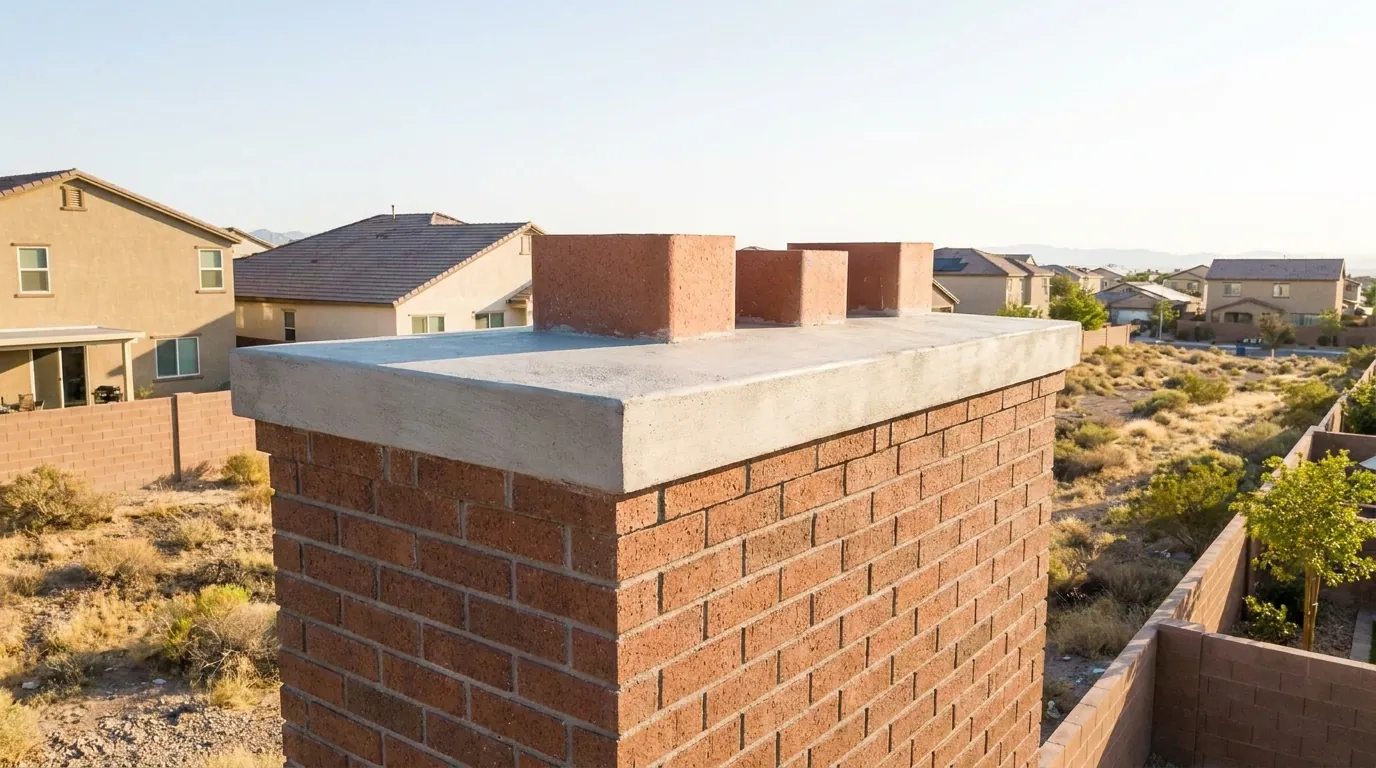
Installation work covers the parts of a chimney that get newly built or replaced rather than patched: a fresh concrete crown, a new cap, new flashing, or a rebuilt stack when the old one is beyond saving. Whether you are finishing a remodel, replacing a chimney that failed years ago, or upgrading worn-out components, the aim is a structure that will hold up to full desert sun and the occasional monsoon without early failure.
The desert is unforgiving of shortcuts. A crown poured too thin or without an overhang will crack within a few seasons here; flashing sealed with the wrong product bakes brittle and leaks. Getting the details right at installation is what keeps a chimney maintenance-light for years. If you are unsure whether you need new work or a repair, start with our chimney masonry repair service, and for older stacks compare it against restoration and rebuild repair.
Common installation and replacement work for Spring Valley chimneys.
Cast with a slope, overhang, and drip edge so water is directed away from the brick — the single most important detail for a long-lasting chimney in this climate.
New caps sized to the flue to keep rain, embers, birds, and blowing debris out while allowing proper draft.
New step and counter flashing installed and sealed with products chosen to survive desert UV, tying the chimney tightly to the roof.
When a chimney must be replaced above the roofline, we build a new stack in matching brick or block on a sound base.
Spring Valley gets scarce rainfall, but when the summer monsoon arrives it comes hard and fast. A chimney that shrugs off dry weather all year can leak badly in a single storm if the crown, cap, and flashing were not built to shed water. That is why we treat those three components as the core of any installation, not afterthoughts.
Heat drives the material choices too. Fresh concrete and mortar that cure too quickly in direct sun never reach full strength, so timing and curing are planned around the temperature. Sealants and flashing metals are chosen for UV resistance so they do not go brittle after a couple of summers. For homeowners weighing new work against patching, our guide to chimney repair cost in Spring Valley explains the trade-offs.
Tell us what you are working with — a remodel, a failed chimney, or worn components — and we will walk you through what a solid installation involves. Call to schedule an assessment.
Serving Spring Valley and nearby communities.
When a component like a crown or cap is missing or too far gone to patch, or when a stack must be replaced above the roofline, installation is the sound option. A repair makes sense only when the existing masonry still has structural life in it.
A crown that lasts here is cast thick enough, sloped to drain, and given an overhang with a drip edge so water is thrown clear of the brick. Thin crowns without an overhang crack quickly under constant sun and let water track down the stack.
We match brick color, texture, and mortar as closely as available materials allow. Exact matches on older brick are not always possible, and we will show you options before starting.
It depends on the scope — a new crown or cap may be a short job, while a rebuilt stack takes longer, in part because concrete and mortar need proper curing time in the heat. We give you a realistic timeline after seeing the site.