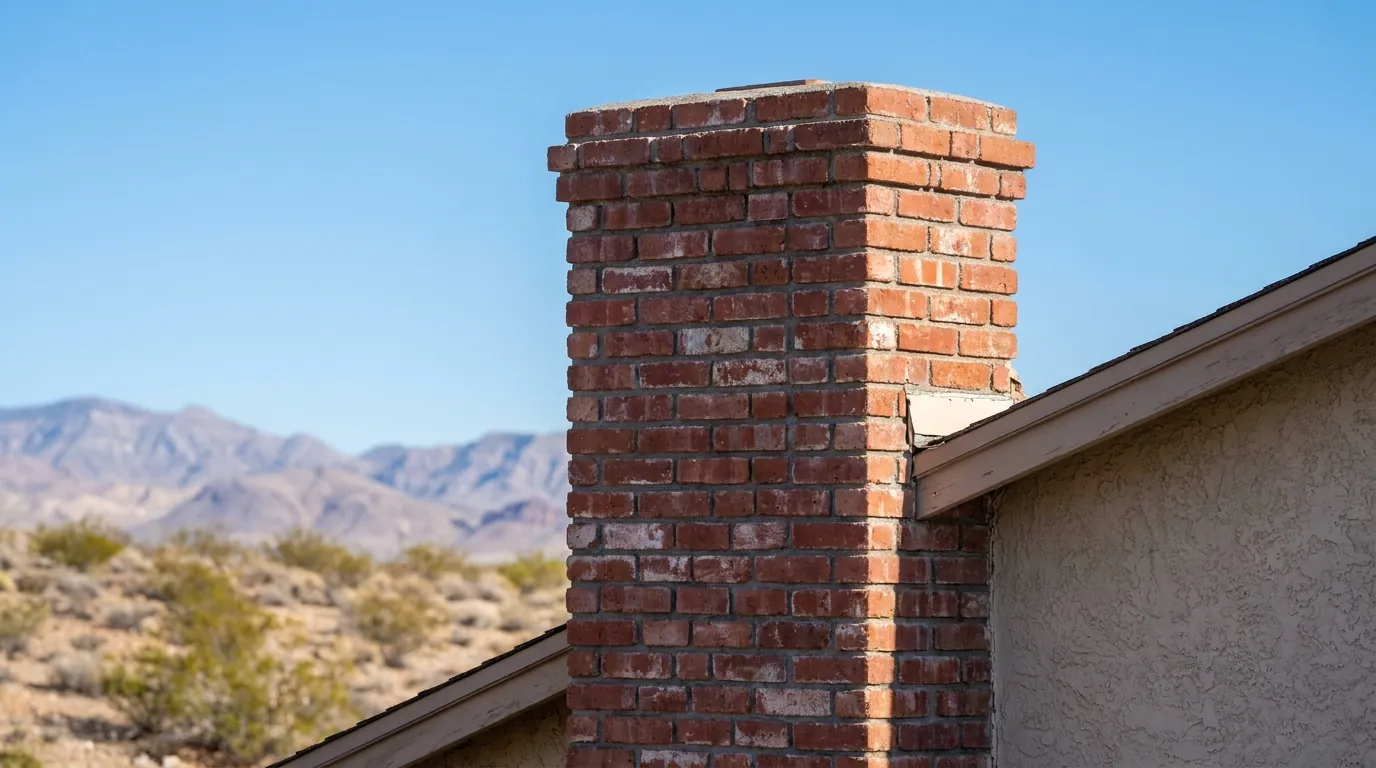
Chimney rebuild above roofline
When the brick above the roof is spalling, leaning, or has lost too much mortar to repoint, the exposed section is taken down to sound masonry and rebuilt course by course.
Spring Valley Chimney Masonry
Brickwork, crowns, flues and flashing repaired for the heat, wind and alkaline-soil conditions of the Las Vegas valley.
If you own a home in Spring Valley with a masonry chimney, the structure above your roofline takes more abuse than almost any other part of the house. It sits fully exposed to the sun, to the wind that funnels across the valley, and to the handful of hard rain events each year that arrive all at once. That combination of intense heat, dry air, and sudden moisture is exactly what cracks crowns, opens mortar joints, and lets water find its way inside. This site is for homeowners who have noticed a problem — a stain on the ceiling near the chimney, crumbling mortar, loose brick, a rusting cap — and want to understand what it means and what repairing it involves.
We focus only on chimney masonry: repointing and tuckpointing, crown and cap work, rebuilds above the roofline, stainless steel flue relining, flashing and leak repair, and firebox and hearth restoration. Because the work is the whole business, the pages here go into real detail on symptoms, causes and the decisions in front of you rather than generic descriptions. If you are comparing options, start with the service most similar to what you are seeing and read how it actually unfolds.
Whether your chimney serves a wood-burning fireplace, a gas insert, or a water heater and furnace venting through an older clay-lined flue, the masonry and the liner both matter. A chimney that looks fine from the ground can still have a cracked crown or a flue that is no longer safe to vent through. The goal of these pages is to help you tell the difference and know what to ask for.
People assume a dry climate is easy on masonry. In practice, the Mojave is hard on it in ways that are easy to miss. Daytime surface temperatures on a sun-facing chimney swing enormously against overnight lows, and that daily expansion and contraction slowly fatigues mortar and concrete. On the rare winter nights when temperatures dip below freezing, any water that soaked into porous brick or an aging crown during a rain can freeze and expand — the freeze-thaw cycle that pops the face off brick and crazes crown surfaces. Over years, soft or historic brick loses its face and mortar turns sandy and loose.
Rain here is not frequent, but it tends to come as wind-driven downpours during monsoon season. Wind-driven rain is pushed sideways into joints and under flashing in a way that gentle rain never is, which is why a chimney can stay dry for months and then leak hard during one storm. That pattern is explained on our chimney flashing and leak repair page and in our article on why chimneys leak in rain but not snow.
The alkaline desert soils and mineral-heavy water in the valley leave their mark too, feeding efflorescence — the white, powdery mineral bloom that appears on brick that is wicking moisture. Efflorescence is a symptom worth reading rather than just scrubbing off. When older clay flue tiles crack from heat cycling, stainless steel flue relining is often the practical path to a safe venting system without a full rebuild. Addressing a cracked crown or open joints while they are small keeps a repair focused rather than letting water reach deeper masonry.
Six core areas of masonry chimney work, each explained in depth on its own page.
When the brick above the roof is spalling, leaning, or has lost too much mortar to repoint, the exposed section is taken down to sound masonry and rebuilt course by course.
Failing mortar joints are cut out and refilled so water stops tracking into the chimney. We match joint profile and mortar to the existing brick.
The concrete crown and the metal cap are the first line against rain. Cracked crowns and rusted caps are replaced to keep water off the masonry below.
Older unlined or cracked clay flues can be relined with a stainless steel liner sized to your appliance, restoring a safe path for combustion gases.
Where the chimney meets the roof is the most common leak point. Flashing is repaired or replaced and counterflashing is tied back into the mortar joint.
Cracked firebrick, deteriorated refractory mortar, and damaged hearth masonry are restored so the firebox holds up to heat as it should.
Spring Valley and the surrounding communities across the Las Vegas valley and nearby desert towns.
Common signs include water stains on the ceiling or wall near the chimney, white efflorescence on the brick, crumbling or missing mortar, a cracked concrete crown, and a rusted or missing cap. Any of these is worth looking at before the next monsoon season, since moisture tends to widen existing cracks over time.
Cost depends on what the work is — a crown reseal, a section of repointing, a cap, a flue liner, or a rebuild above the roof are very different jobs. Access, chimney height, and how much sound masonry remains all affect the figure. Our chimney repair cost article walks through the main drivers.
Monsoon storms here drive rain sideways into mortar joints and under flashing that stays dry in a light rain. A crown crack or gap in the flashing can let water in only when wind pressure forces it, which is why leaks seem to come and go with the weather.
Yes. Brick and crown damage are visible, but a cracked clay flue liner inside the chimney is not. A flue that has cracked from heat cycling can let combustion gases reach the surrounding masonry, which is why the liner should be checked as well as the exterior.
Spring Valley plus Enterprise, Las Vegas, Henderson, North Las Vegas, Boulder City, and Sandy Valley. Each area page describes the housing stock and conditions specific to that community.
Describe what you are seeing — a stain, loose brick, a crack in the crown, a cap that has blown off — and we can talk through what the repair would involve and how it would be scheduled.
Serving Spring Valley and the surrounding Las Vegas valley.
Practical answers to the questions we hear most in Spring Valley, NV.
What drives chimney repair cost in Spring Valley, NV — from minor repointing to full above-roof rebuilds, and how desert conditions change the math.
How to choose a chimney masonry contractor in Spring Valley, NV — the questions to ask, the red flags to avoid, and how to judge a repair quote.
A plain-language look at what chimney masonry repair involves in Spring Valley, NV — from inspection to repointing, crowns, flashing, and rebuilds.