Tuckpointing and Brick Repointing
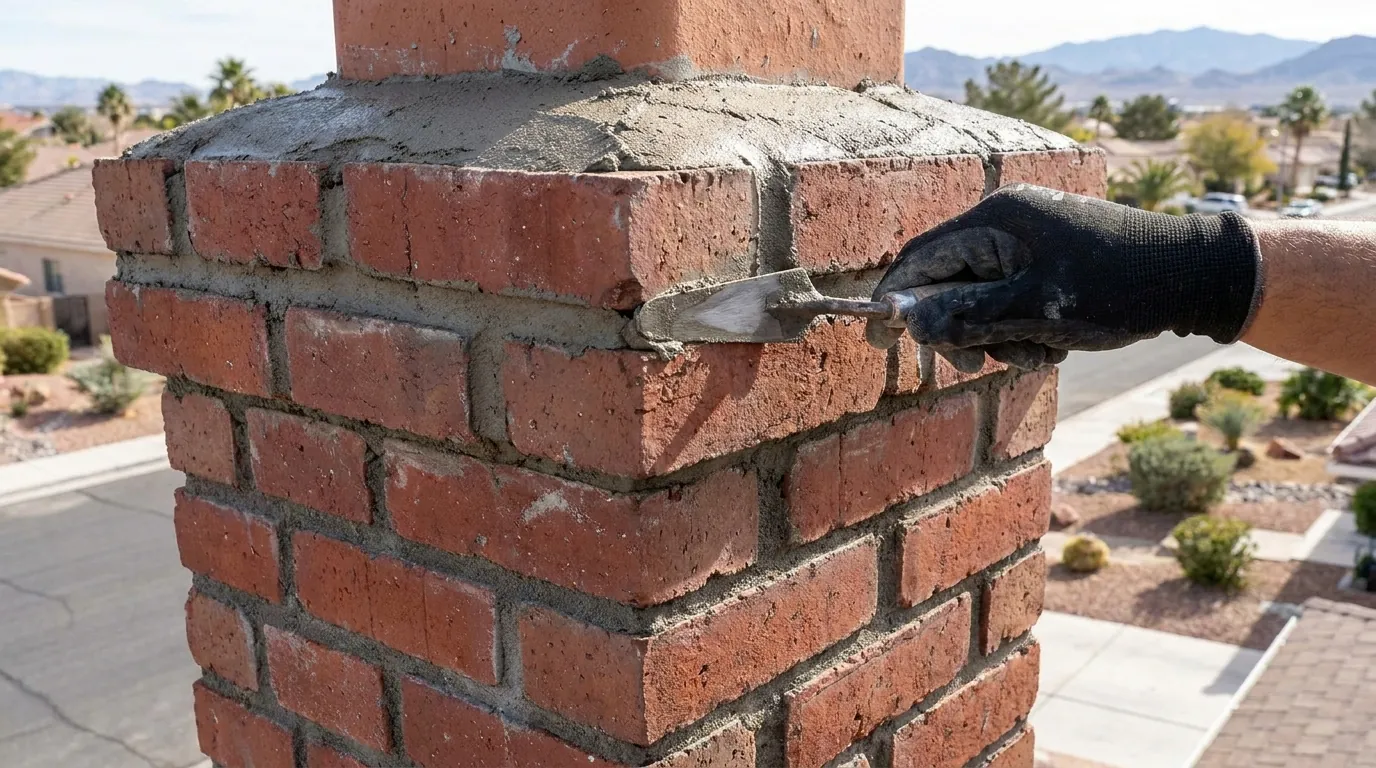
Tuckpointing and brick repointing in Spring Valley, NV — raking out failed mortar joints and repacking them to protect the brick and the stack.
Why mortar joints fail first
On almost every masonry chimney, the mortar gives out before the brick does. Mortar is the softer, more porous part of the assembly by design — it is meant to be the sacrificial layer that weathers and can be replaced. When joints erode, you'll see gaps and recessed lines between the bricks, sandy mortar crumbs collecting at the base, and in bad cases daylight or a gap you can slip a key into. Those open joints are the main way water gets into a chimney, and once water is traveling through the masonry it starts to loosen more brick and feed leaks inside the house.
Repointing — also called tuckpointing — is the process of raking the failed mortar out to a sound depth and packing fresh mortar back in. Done at the right stage, it keeps a localized repointing job from growing into a situation where the brick itself has to be rebuilt. It's one of the most cost-effective pieces of chimney maintenance because it addresses the problem at the joint, before water has done deeper damage.
Repointing is closely related to a few other repairs. Where the top of a stack has already deteriorated past the brick, a rebuild above the roofline may be the right call instead, and a failing crown overhead is often what let the water into the joints in the first place — so we check the crown and cap at the same time.
How repointing is done
Good repointing is about depth, cleanliness, and matching the original mortar — not just smearing new mortar over old.
-
Rake the joints
Failed mortar is cut out to a consistent depth — generally about twice the joint width — so the new mortar has solid material to bond to. Loose and sandy material is cleared completely.
-
Match the mortar
We choose a mortar compatible with the existing brick and joints. On older, softer brick that means a softer mortar; a mortar harder than the brick would trap moisture and damage the brick faces over time.
-
Repack and tool
Fresh mortar is packed into the raked joints in layers and tooled to match the original joint profile, so the repair blends in and sheds water the way the original did.
-
Clean and cure
Excess mortar is cleaned off the brick faces and the new joints are allowed to cure. In Spring Valley's dry heat we take care that the mortar doesn't cure too fast to set properly.
What Spring Valley conditions do to mortar
The desert climate here is tough on mortar joints in ways people don't always expect. Strong, direct sun drives big daily temperature swings that expand and contract the masonry and slowly fatigue the joints. When monsoon rain arrives, it comes wind-driven and heavy, forcing water into any joint that has opened up. On cold winter nights that trapped moisture can freeze and thaw, and each cycle pries the joint a little further apart.
Alkaline desert dust and mineral-rich local water also leave salts at the joint faces that accelerate surface erosion. Because our dry air pulls moisture out of fresh mortar quickly, curing has to be managed carefully so new joints develop their proper strength. Matching mortar hardness to older brick matters especially on the valley's historic masonry, where a too-hard modern mortar can do more harm than the original failing joints. If you're unsure whether your chimney needs repointing or has gone further, our chimney repair overview and an on-site look will point you the right direction.
Caught your mortar crumbling?
If you're finding sandy grit at the base of the chimney or can see recessed joints, send photos or book a look and we'll assess whether repointing is the right step.
Serving Spring Valley, Enterprise, Henderson and the surrounding area.
Frequently asked questions
What's the difference between tuckpointing and repointing?
In everyday use the terms are often interchangeable and both describe replacing failed mortar joints. Strictly, tuckpointing refers to a decorative two-color technique, while repointing is the general repair of raking out and refilling joints. Most chimney work is repointing.
How do I know if my joints need repointing?
Look for recessed or missing mortar between the bricks, sandy crumbs collecting at the base of the chimney, and gaps you can fit a key into. These are signs the joints have eroded enough to let water into the stack and should be assessed.
Can repointing be done on an older, soft-brick chimney?
Yes, and it's often the right repair for older masonry — but the mortar must be matched to the softer brick. A mortar harder than the brick traps moisture and damages the brick faces, so material selection is a key part of the job.
What affects the cost of repointing?
Cost depends on how much of the stack needs work, the height and access of the chimney, the condition of the brick, and the mortar match required. Spot repointing a few joints is far less than repointing a whole stack.