Chimney Rebuild Above the Roofline
Rebuilding the exposed section of a masonry chimney above the roofline in Spring Valley, NV — when spalled brick and failed mortar call for a rebuild.
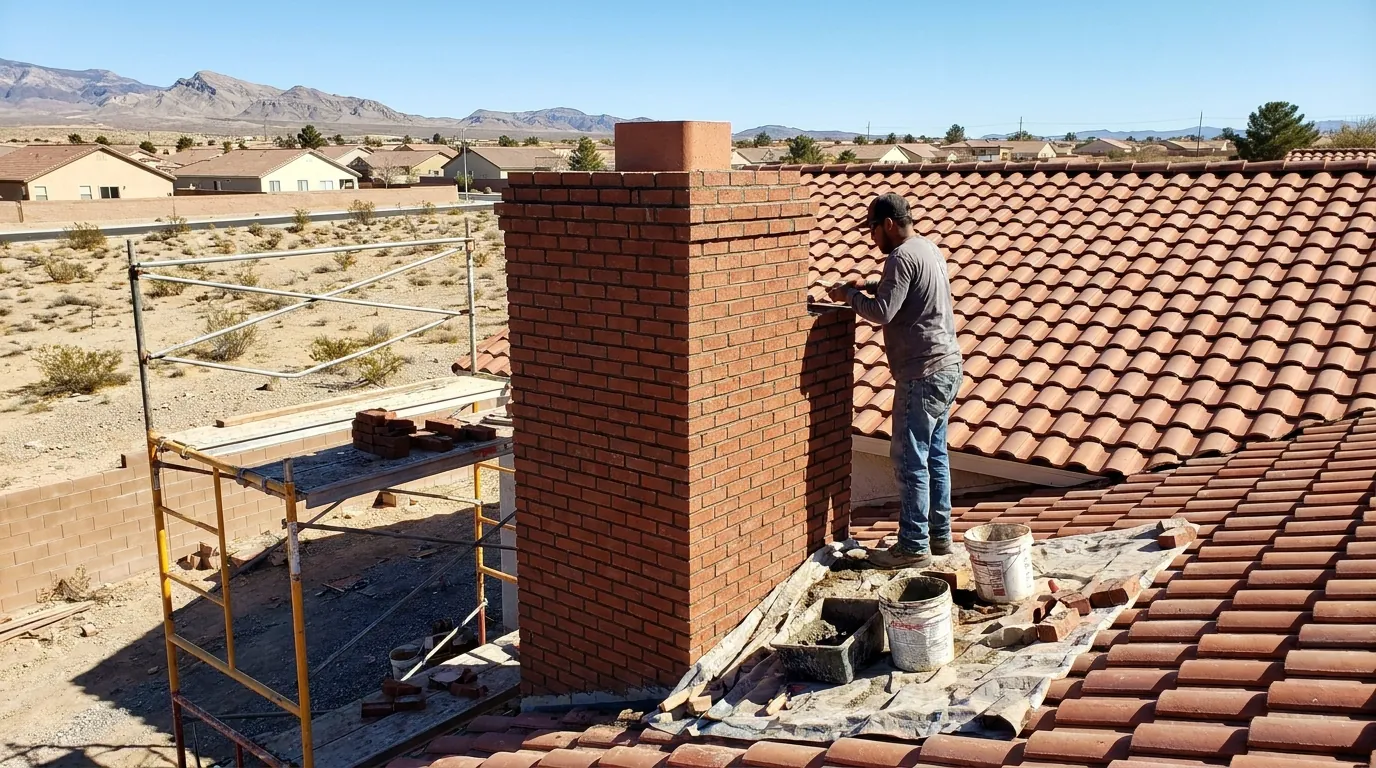
When a chimney needs rebuilding, not patching
The section of a chimney that sits above the roofline takes the hardest weather of any masonry on your Spring Valley home. It has brick on all four sides exposed to sun, wind-driven rain, and the daily temperature swings common across the Las Vegas valley. Over years, the mortar joints lose their bond, individual bricks flake apart layer by layer, and the whole stack can begin to lean or twist. Once that decay runs through more than a few courses, repointing alone no longer solves the problem — the masonry has lost the structure that holds it plumb, and the exposed portion has to come down and go back up.
The warning signs are visible from the ground with binoculars or from a window on an upper floor. Look for bricks whose faces have popped off and left a crumbly, pitted surface; mortar joints you can rake out with a key; a crown that has broken into pieces; or a stack that no longer lines up square against the sky. Loose brick landing in the gutter or on the roof is a clear sign the stack is coming apart. If you see any of these, the exposed masonry is a candidate for a rebuild rather than patch repair.
A rebuild above the roofline is a defined, contained job: everything below the roof usually stays, and we reconstruct from the flashing line up. It pairs naturally with a new chimney crown and cap and fresh flashing and leak repair, since those are the details that protect the new brick going forward.
What a rebuild involves
A rebuild above the roofline follows a clear sequence from teardown to finished crown.
-
Assess and match materials
We examine the existing brick size, color, and bond pattern so the rebuilt stack ties in with the rest of the house. On older Spring Valley homes the original brick may be a softer, lower-fired unit, which affects the brick and mortar we choose to match it.
-
Dismantle the failed section
The exposed masonry is taken down course by course to a sound base below the roofline. Debris is lowered rather than dropped so the roof and flashing aren't damaged in the process.
-
Rebuild the stack
New brick is laid in a mortar suited to the existing masonry, keeping the stack plumb and the courses level. The flue is kept properly centered and extended to the correct height above the roof.
-
Cap it off
A new poured crown with a proper overhang and drip edge, plus a cap over the flue, finishes the rebuild and keeps water off the fresh brick and out of the flue.
How the desert changes this work
Spring Valley's arid heat and scarce rainfall don't spare chimney masonry — they just damage it differently than a wet climate does. Intense sun bakes the south and west faces of a stack and drives large daily temperature swings that work mortar loose over time. When rain does come, it often arrives as wind-driven monsoon downpours that hit the exposed brick hard and soak into any joint that has opened up. Overnight cooling can then pull that moisture through a freeze-thaw cycle a few times each winter, which is what spalls the face off soft brick.
Alkaline desert dust and the mineral content of local water also leave salt deposits that work at the surface of older brick. All of this means a rebuilt stack benefits from brick and mortar chosen for these specific conditions rather than whatever matches cheapest. If only the top few courses are failing while the rest of the stack is sound, tuckpointing and brick repointing may be the better route — part of our assessment is telling you honestly which one your chimney needs.
Not sure if yours needs a rebuild?
Send us photos or ask for an on-site look. We'll tell you whether the exposed section can be repointed or has reached the point of a rebuild.
Serving Spring Valley and nearby communities across the Las Vegas valley.
Frequently asked questions
How do I know if my chimney needs a full rebuild instead of repair?
A rebuild is usually warranted when the brick faces are spalling across multiple courses, the mortar has failed throughout, or the stack is visibly leaning. If the decay is limited to surface joints and the brick is otherwise solid, repointing is often enough. An inspection tells the difference.
Does the whole chimney have to be torn down?
No. An above-roofline rebuild reconstructs only the exposed portion from the flashing line up. The masonry inside the house and below the roof typically stays in place, which keeps the job contained.
What drives the cost of a chimney rebuild?
The main factors are the height of the exposed stack, how many courses of brick are involved, the type of brick needed to match the house, roof access and pitch, and whether a new crown, cap, or flashing is included. Each chimney is quoted after it's seen.
Will the new brick match my existing chimney?
We work to match brick size, color, and bond pattern as closely as the current market allows. Exact matches on older brick can be difficult, but a careful selection keeps the rebuilt section consistent with the rest of the house.