Stainless Steel Flue Relining
Stainless steel flue relining in Spring Valley, NV — a new liner for cracked clay flues and older unlined chimneys to vent safely.
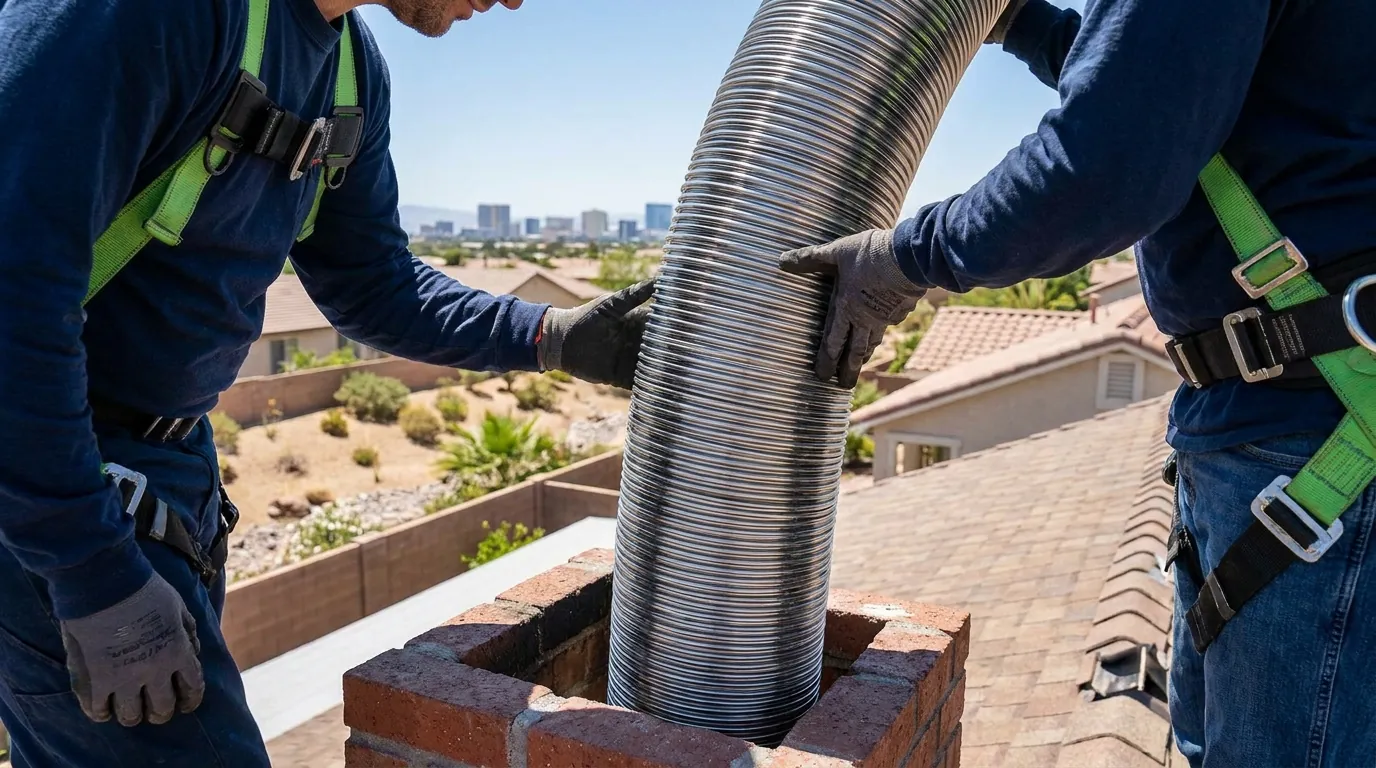
Why a flue gets relined
The flue is the inner passage that carries smoke and combustion gases up and out of the house. Many older chimneys in the valley have clay tile liners, and some older ones have no liner at all. When clay tiles crack, shift, or crumble — or when there's no liner — combustion gases and heat can reach the surrounding masonry and the house framing, and the chimney may no longer draft properly. That's a safety issue as much as a performance one.
Warning signs that a flue needs attention include pieces of clay tile falling into the firebox, a smoky fireplace that won't draw, a strong odor from the chimney, or notes on a chimney inspection calling out a damaged or missing liner. A relining installs a continuous stainless steel liner sized correctly for the appliance or fireplace it serves, giving the flue a smooth, sound, properly sized passage that vents the way it should.
Relining frequently comes up alongside other repairs. Water that reached the flue through a failed crown and cap is a common reason clay tiles deteriorate, and a chimney needing a liner often needs tuckpointing and brick repointing too — we look at the whole system.
How a relining is done
Relining is a measured, methodical job: inspect, size, install, and connect.
-
Inspect the existing flue
The flue is examined, often with a camera, to confirm the condition of any existing liner and the dimensions of the chimney, so the right liner size and material are chosen.
-
Size the liner
A stainless liner is sized to match the fireplace or appliance it serves. An oversized or undersized flue drafts poorly, so correct sizing is central to the job.
-
Install the liner
The stainless liner is run down the flue from the top. Where required, insulation is added around the liner so it holds heat and drafts properly through the stack.
-
Connect and cap
The liner is connected at the bottom to the fireplace or appliance and finished at the top with a cap, completing a continuous path from the firebox to the open air.
Local conditions and why stainless
Spring Valley sits in a dry, mineral-rich environment, and the alkaline dust and mineral content in local air and water are hard on chimney materials over time. Stainless steel stands up to those conditions and to the heat and byproducts of combustion better than bare steel, which is why it's the common choice for relining here. For older unlined masonry chimneys across the valley — and there are many — a stainless liner is often the practical way to bring the flue up to a safe, functional standard without rebuilding the chimney from the inside out.
The desert's freeze-thaw nights and wind-driven monsoon rain also damage clay liners indirectly: water that gets into the masonry through cracked crowns and open joints reaches the tiles, and the repeated wetting and cold accelerates their breakdown. That's why relining is best considered as part of the whole picture — crown, cap, flashing, and joints all feed into whether the flue stays sound. Our chimney repair overview explains how these pieces fit together.
Told your flue needs relining?
If an inspection flagged a cracked or missing liner, or your fireplace won't draw, ask us for an assessment of what the flue needs.
Serving Spring Valley and nearby communities in the Las Vegas valley.
Frequently asked questions
How do I know if my flue needs relining?
Common signs are pieces of clay tile appearing in the firebox, a fireplace that smokes or won't draw, strong chimney odors, or an inspection report noting a cracked or missing liner. A camera inspection of the flue confirms the condition.
Why stainless steel instead of another material?
Stainless steel resists the heat and byproducts of combustion and holds up well to the mineral-rich air and water in this area. It can be sized precisely to the fireplace or appliance it serves, which is important for proper drafting.
Can an unlined chimney be relined?
Yes. Many older masonry chimneys in the valley were built without a liner, and installing a stainless liner is a practical way to give them a safe, properly sized flue without rebuilding the chimney internally.
What affects the cost of relining?
Cost depends on the length and size of the flue, the liner material and whether insulation is needed, the condition of the existing chimney, and roof access. A camera inspection first lets the job be scoped accurately.