Chimney Crown and Cap Replacement
Chimney crown repair and cap replacement in Spring Valley, NV — the concrete crown and flue cap that keep water out of your chimney top.
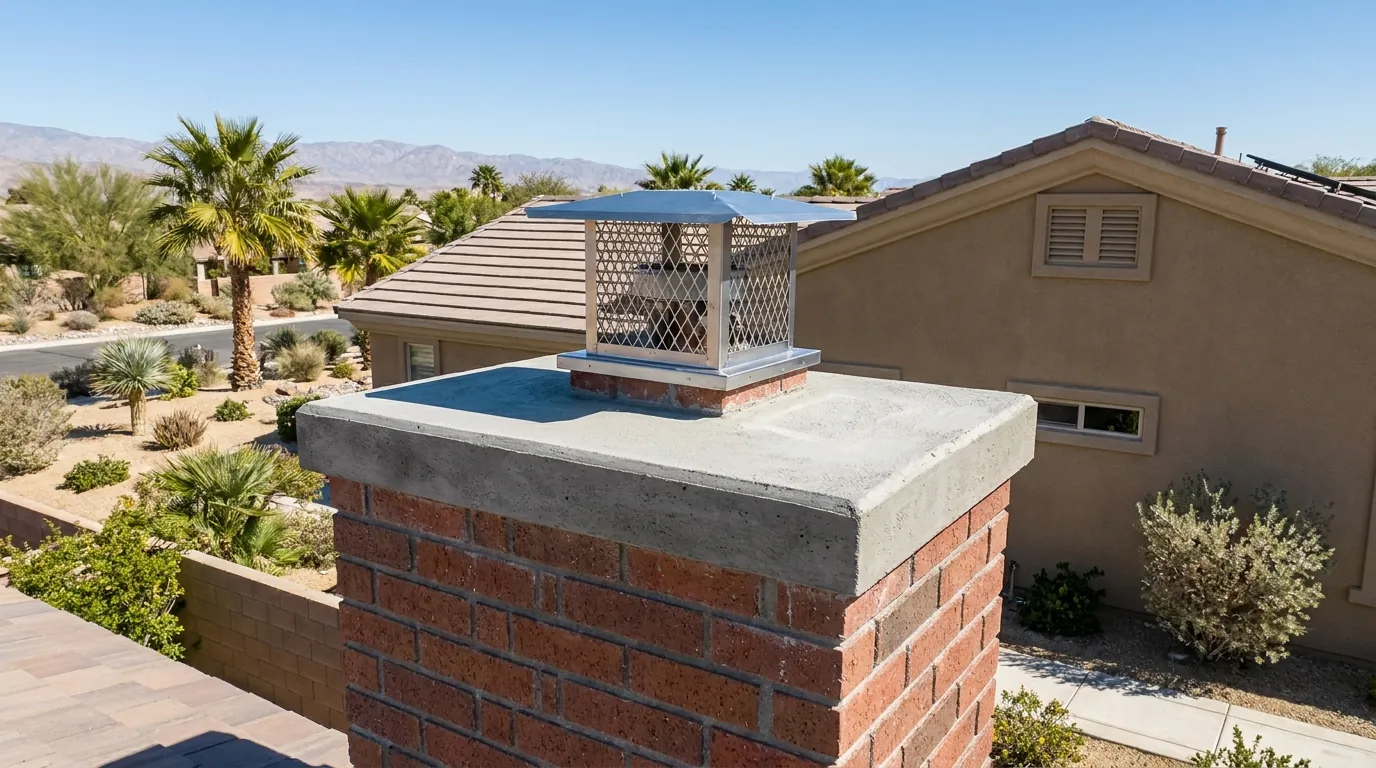
The crown and cap do the most protective work
The crown is the sloped slab of concrete or mortar across the top of the chimney, and the cap is the metal cover over the flue opening. Together they are the chimney's roof — the crown sheds water off the top of the masonry and the cap keeps rain, debris, and animals out of the flue. When either one fails, water has a direct path into the stack, and that water is behind most of the chimney problems we see in Spring Valley.
A failing crown shows cracks running across its surface, chunks that have broken loose, or a slab that has no overhang to throw water clear of the brick. A missing or damaged cap lets rain fall straight down the flue and lets birds and debris collect inside. Chimney crown repair is sometimes possible when the cracking is minor and the slab is otherwise sound, but a crown that has broken up or was poorly formed in the first place is better replaced with a properly poured one that has a real overhang and drip edge.
Because the crown is what keeps water out of the joints below it, a new crown often goes hand in hand with tuckpointing and brick repointing. If the top courses of brick under the crown have already decayed, a rebuild above the roofline and a new crown are usually done together.
What crown and cap replacement involves
Replacing a crown and cap is about forming a slab that actually sheds water and fitting a cap sized to the flue.
-
Remove the failed crown
The cracked or broken crown is removed down to sound masonry, and the top course of brick is checked for damage underneath before anything new is formed.
-
Form and pour a new crown
A new crown is formed with a slope to shed water, an overhang past the brick face, and a drip edge so runoff falls clear of the stack rather than down the brick. A gap is kept around the flue so the two can move independently.
-
Fit a new cap
A stainless cap sized to the flue is fitted over the opening to keep rain, debris, and animals out while letting the flue draft properly. Stainless stands up well to the mineral content in our local air and water.
-
Seal and finish
Joints and the flue-to-crown gap are detailed so water is directed off the top and away from the brick, finishing a watertight chimney top.
Why crowns fail fast in the desert
Crowns in the Spring Valley area take a beating from the sun above all. The top slab is flat, fully exposed, and bakes all day, and the large daily temperature swings expand and contract the concrete until hairline cracks open. Those cracks don't matter until the monsoon season, when wind-driven rain finds them and runs into the masonry. On cold winter nights, water sitting in a cracked crown can freeze and thaw, widening the cracks each time — the same freeze-thaw action that breaks up brick faces.
Many older crowns in the valley were formed thin, with no overhang, so runoff pours straight down the brick instead of being thrown clear — which is a steady source of the leaks and spalling we find below. A properly poured crown with a real overhang and drip edge changes how water leaves the top of the chimney. If you're chasing a leak and aren't sure the crown is the culprit, our flashing and leak repair work is often done alongside crown replacement to rule out every water path.
Seeing cracks on your crown?
A cracked crown is one of the easiest problems to see from the roof and one of the most important to address. Send photos or ask for a look.
Serving Spring Valley and the surrounding Las Vegas valley communities.
Frequently asked questions
What's the difference between the crown and the cap?
The crown is the sloped concrete or mortar slab across the entire top of the chimney that sheds water off the masonry. The cap is the metal cover over the flue opening that keeps rain, debris, and animals out. A chimney needs both working to stay dry.
Can a cracked crown be repaired instead of replaced?
Minor cracking on an otherwise sound crown can sometimes be sealed. A crown that has broken into pieces, lacks an overhang, or was poorly formed is better replaced with a properly poured slab, since repeated patching of a failing crown rarely holds up long.
Do I really need a cap on the flue?
A cap keeps rain out of the flue, blocks birds and debris from nesting inside, and helps prevent downdrafts. Without one, water falls straight down the flue and can damage the liner and firebox over time.
What does crown and cap replacement depend on for cost?
Cost is driven by the size of the crown, the condition of the brick beneath it, roof access and pitch, the number and size of flues needing caps, and whether repointing or other repairs are done at the same time.