Chimney Flashing and Leak Repair
Chimney flashing repair and leak repair in Spring Valley, NV — stopping water where the chimney meets the roof and tracing leaks to the source.
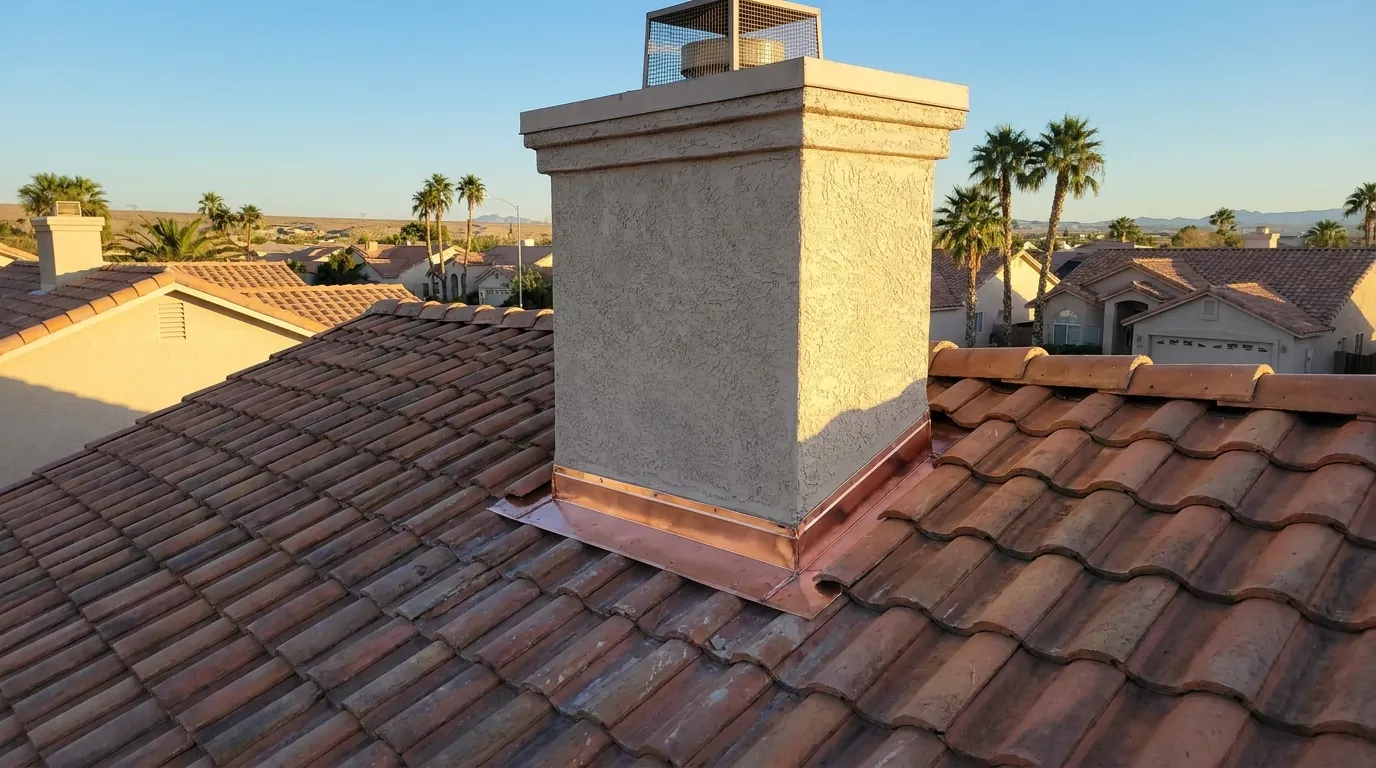
Where chimney leaks really start
When a chimney leaks, the water is almost always getting in at one of a few predictable points, and the flashing is at the top of the list. Flashing is the metal that seals the joint where the chimney passes through the roof. Over time the sealant dries and cracks, the metal lifts or corrodes, and the step and counter flashing separate from the brick — and that opening is a direct path for water into the ceiling and walls around the chimney. Chimney flashing repair addresses that joint specifically.
The signs of a chimney leak show up inside before they're obvious outside: water stains on the ceiling near the chimney, a damp or musty smell, discolored or bubbling paint on an upper wall, or drips during a hard rain. The tricky part is that the leak often shows up some distance from where water actually enters, so leak repair starts with tracing the path. Flashing is the usual culprit, but a cracked crown, open mortar joints, or spalled brick can all let water in too.
Because of that, flashing and leak repair overlaps with other work. A failed crown and cap or eroded mortar found during tuckpointing and brick repointing is often part of the same leak — so we trace the water to its real source rather than just resealing the flashing and hoping.
How flashing and leak repair is done
Good leak repair finds the actual water path first, then seals it properly rather than smearing sealant over symptoms.
-
Trace the leak
We inspect the flashing, crown, joints, and brick to find where water is actually entering. Interior stains are mapped back to the true entry point, since leaks often travel before they appear.
-
Repair or replace the flashing
Failed flashing is resealed, repaired, or replaced so the step and counter flashing lock properly into the brick and shed water back onto the roof rather than behind it.
-
Address other water paths
If the crown, cap, or mortar joints are also letting water in, those are repaired as part of the same job so the leak is fully closed off rather than partially.
-
Verify and finish
The repaired areas are checked so water is directed off the chimney and roof the way it should be, finishing a sealed, weather-tight transition.
Why leaks surprise desert homeowners
People are often surprised that a chimney leaks in a place as dry as Spring Valley — but the arid climate is exactly what sets up the failure. Long stretches of intense sun dry out and crack flashing sealant and bake the masonry, opening the joints and gaps that water will later use. Rainfall here is scarce but concentrated: the monsoon season brings wind-driven downpours that drive water sideways into flashing gaps and open mortar that a gentle rain would never reach. So the chimney is dry and seemingly fine for months, then leaks hard during a single storm.
Those storms are also why a leak that shows during rain may not show during the rare cold or snow — water behaves differently, and wind-driven rain reaches gaps that quiet precipitation doesn't. We cover that pattern in more detail in our article on why a chimney leaks when it rains but not when it snows. Addressing the flashing and any related crown or joint failures closes off the paths that monsoon rain exploits.
Chasing a chimney leak?
If you see stains near the chimney after a storm, let us trace where the water is really getting in before it spreads further into the house.
Serving Spring Valley, Enterprise, Henderson and surrounding areas.
Frequently asked questions
What is chimney flashing and why does it fail?
Flashing is the metal that seals the joint where the chimney passes through the roof. It fails when the sealant dries and cracks, the metal corrodes or lifts, or the step and counter flashing separate from the brick — all of which open a path for water.
How do I know the leak is from the chimney and not the roof?
Water stains clustered around the chimney, especially on the ceiling near it after a hard rain, point to the chimney. Because water travels before it appears, tracing the actual entry point is part of the repair rather than guessing.
Why does my chimney only leak during heavy rain?
The valley's monsoon storms are wind-driven and push water sideways into flashing gaps and open joints that light rain never reaches. That's why a chimney can be dry for months and then leak hard during a single storm.
What drives the cost of flashing and leak repair?
Cost depends on whether the flashing can be resealed or must be replaced, the roof pitch and access, and whether the crown, cap, or mortar joints also need work to fully close the leak. Tracing the source first keeps the repair focused.